Restricted Use Pesticide Usage: South Central Oʻahu
Wahiawā-Ewa
Executive Summary (2020-2021)
This brief summarizes reported pesticide use in South Central Oʻahu during 2020 and 2021, focusing on chemicals applied near schools and residential areas. This includes analysis of RUP use in the communities south of Wahiawā, surrounding Mililani, Royal Kunia, Waipahu and south to Ewa Gentry.
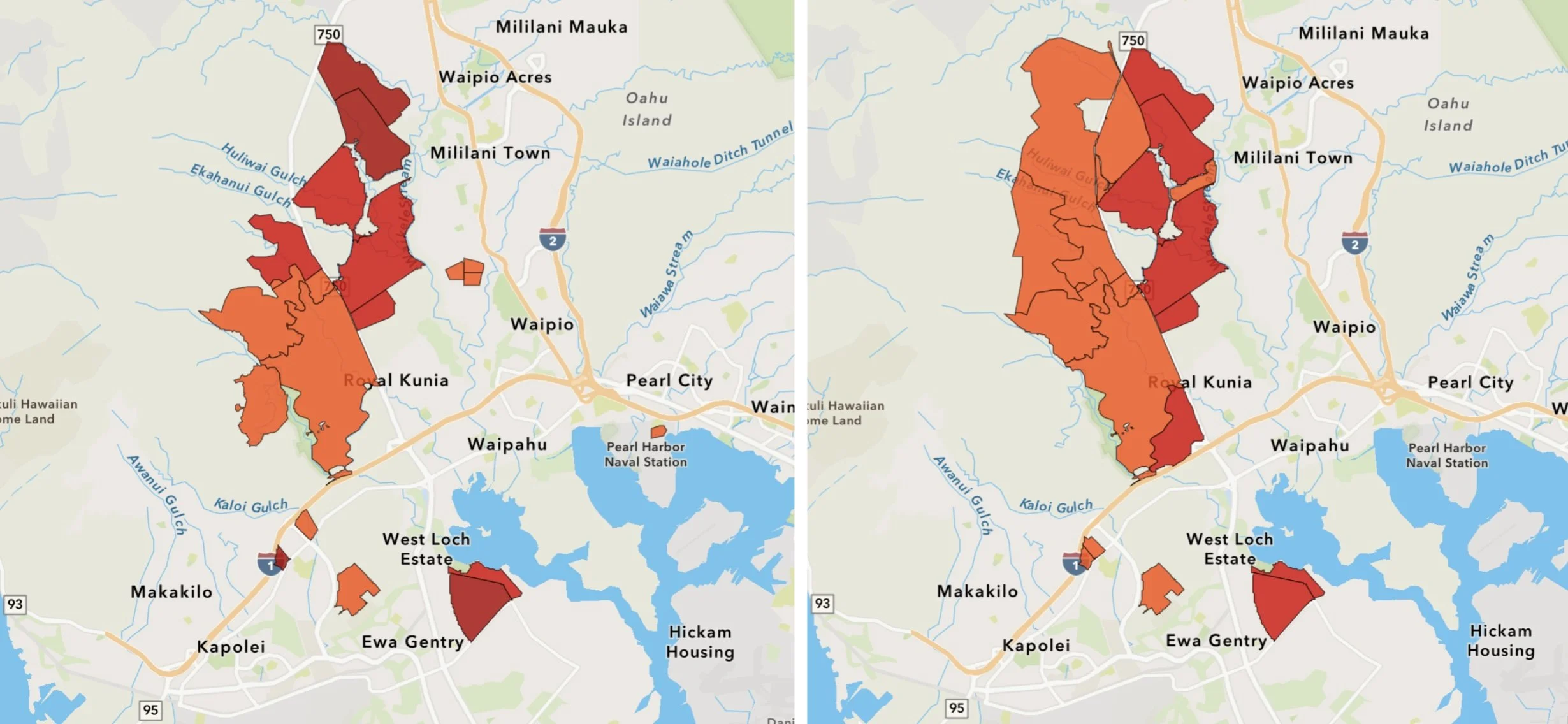
2020 & 2021
The findings highlight ongoing public health and environmental concerns associated with the use of highly hazardous pesticides and pesticide mixtures.
Key Findings
Persistent use of highly hazardous pesticides
Continued application of paraquat dichloride, increasing from approximately 531 lbs active ingredient in 2020 to approximately 953 lbs in 2021, despite its extreme acute toxicity and links to Parkinson’s disease.
Substantial use of methomyl, oxamyl, diazinon, and naled, all acutely toxic insecticides that affect the nervous system and pose heightened risks to children.
Ongoing neurotoxic exposure risks
Repeated use of carbamate and organophosphate insecticides, known cholinesterase inhibitors.
These chemicals are associated with acute poisoning, respiratory distress, and long-term neurological impacts, particularly for developing brains.
Heavy reliance on synthetic pyrethroids
Extensive use of bifenthrin, lambda-cyhalothrin, cyfluthrins, permethrin, esfenvalerate, and zeta-cypermethrin across both years.
Synthetic pyrethroids are highly toxic to aquatic life and contribute to long-term contamination of waterways and sediments.
Chemical mixtures and cumulative exposure
Communities are exposed to multiple pesticide classes simultaneously, including herbicides, insecticides, fungicides, and insect growth regulators.
Regulatory systems evaluate pesticides largely one at a time, failing to address real-world cumulative and synergistic exposure.
Shift in risk, not reduction
While soil fumigant use declined in 2021 compared to 2020, overall risk remained high due to increased reliance on other highly toxic chemicals, including paraquat and carbamates.
Schools at Risk
Pesticide residues travel miles from application sites into schoolyards, homes, water catchments, and air. Chronic exposure threatens children’s developing bodies, contributing to:
Brain development impacts
Respiratory harm and asthma risk
Childhood cancer susceptibility
Hormonal/endocrine interference
While some of the schools in Central Oʻahu that may be just over a mile away from usage, the multiple points of exposure along with the extremely high amounts of drift prone RUP’s applied nearby raises concerns about health risks.
There are nine schools in this region located within one mile of RUP applications (2020-2021):
Ewa Elementary, Eva Villages
Friendship Christian Schools, Ewa Villages
Holomua Elementary, Ewa Gentry
Honouliuli Middle, East Kapolei
Honowai Elementary,Waipahu
Kaleiopuu Elementary,Waipahu
Mililani Uka Elementary, Mililani
New Hope Christian School,Waipahu
Solomon Elementary, Wahiawā
Why This Matters
South Central Oʻahu communities, including keiki and kūpuna, live and learn in close proximity to agricultural areas where these pesticides are applied. The data show that hazardous pesticide exposure is not declining, but rather shifting among chemical classes, leaving communities with ongoing health and environmental risks and limited regulatory protections.
The 2020–2021 pesticide use data for South Central Oʻahu demonstrate sustained exposure to highly hazardous pesticides near schools and communities. Without stronger safeguards that address cumulative exposure and real-world conditions, families will continue to bear unnecessary and preventable health risks.
If you want the full South Central Oʻahu Report, email safefarmssafefood@gmail.com 